


From Roll to Rack: The Manufacturing Process of a Corrugated Plastic Sleeve Pack
In the world of industrial packaging, few innovations have quietly changed the game like the plastic sleeve pack. Known by many names—sleeve pack, pallet sleeve container, or coaming box—this simple yet clever combination of a pallet, a collapsible sleeve, and a lid has become the go-to solution for companies that need to move heavy or bulky goods safely, while keeping logistics costs under control.
But how does a flat sheet of plastic become a sturdy, reusable shipping container? Understanding the manufacturing process can help you appreciate the precision engineering behind a product that seems simple at first glance.
## What Exactly Is a Sleeve Pack?
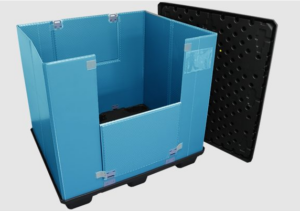
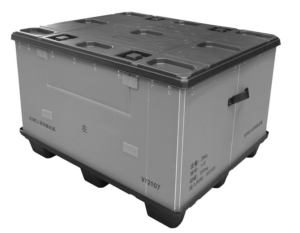
A sleeve pack is a modular packaging system that typically consists of three components: a rigid pallet base, a foldable plastic sleeve that forms the walls, and a top cover. The sleeve itself is made from corrugated plastic sheets—also known as PP hollow board or corrugated plastic board—which gives it a unique internal structure of parallel ribs or grids that provide strength without excessive weight.
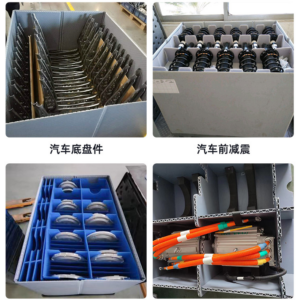
This design makes the sleeve pack exceptionally practical. When empty, the sleeve folds down flat, saving valuable warehouse and transport space. When in use, it can hold a surprising amount of weight, making it ideal for automotive parts, industrial components, and bulk materials.
## The Birth of the Board: Extrusion and Molding
The journey begins with raw plastic material, typically polypropylene (PP) or polyethylene (PE) pellets. These pellets are fed into an extruder, where they are heated and melted into a viscous, dough-like state. The molten plastic is then forced through a specialized die—a T-die or flat die—that shapes it into a continuous flat sheet while simultaneously forming the internal hollow grid structure that gives the board its name.
This step is critical because the internal configuration of the hollow board determines the final strength, flexibility, and insulation properties of the finished product. The board passes through a series of cooling and calibration rollers that set the dimensions and ensure a smooth, consistent surface. For a standard production line, the board width can range from around 1,000mm to 2,800mm, with thicknesses typically between 2mm and 12mm depending on the application.
## Shaping the Sleeve: Cutting, Welding, and Assembly
Once the continuous sheet is produced, it undergoes a transformation from a flat board into a three-dimensional sleeve. This process involves several precision steps:
**Cutting and Scoring:** The board is cut to the specific dimensions of the sleeve, and score lines are applied at the corners to allow the panels to fold cleanly. These score lines or creases are essential for the sleeve’s collapsibility.
**Panel Preparation:** For added strength, many high-quality sleeves use a double-ply construction, where two layers of board are combined. A clever design feature is that the inner and outer layers often have corrugations running in perpendicular directions—vertical in one layer and horizontal in the other. This cross-lamination technique dramatically improves the sleeve’s resistance to bending and impact.
**Corner Joining and Welding:** The panels are then joined at the corners. This is typically done using edge-to-edge welding, which creates a strong, seamless bond between the panels. Some designs incorporate reinforced corner pieces where the corrugations run horizontally, while the main panels have vertical corrugations, further enhancing structural integrity.
**Attaching the Base:** Finally, the sleeve is fitted with a base—often a plastic pallet or a molded base with channels for forklift access. The sleeve may be attached to the base using latches, bolts, or other secure mechanisms, ensuring the entire container stays together during transport.
## Why This Process Matters to Buyers
Understanding the manufacturing process isn’t just an exercise in curiosity—it helps you evaluate quality. The welding strength, the orientation of the internal ribs, and the precision of the cutting all directly impact how well the sleeve pack performs under load.
A well-made sleeve pack can be folded and unfolded hundreds of times without failing, protecting your products across multiple trips. That’s why many manufacturers in the automotive and industrial sectors now specify sleeve packs as their primary returnable packaging solution.
## The Equipment Behind the Board
If you are in the business of producing these packaging solutions, or if you’re considering entering the market, the foundation of your product quality lies in the production line. The extrusion line—comprising an extruder, screen changer, melt pump, forming die, vacuum calibrator, haul-off units, and cutting equipment—is the heart of the operation.
A modern, well-configured line can produce consistent, high-quality hollow board with precise dimensions and excellent surface finish. Whether you are manufacturing sleeves for automotive parts, bins for food processing, or advertising boards, the performance of your extrusion equipment determines your output capacity and your ability to compete.
**If you are looking to produce corrugated plastic sheets for sleeve packs or other applications, we provide complete PP hollow board production lines designed for efficiency and reliability.
** Our equipment is built to handle various widths and thicknesses, ensuring you can meet the specific demands of your customers. Let’s discuss how we can support your production goals.


